*****************************************************************
VIEW
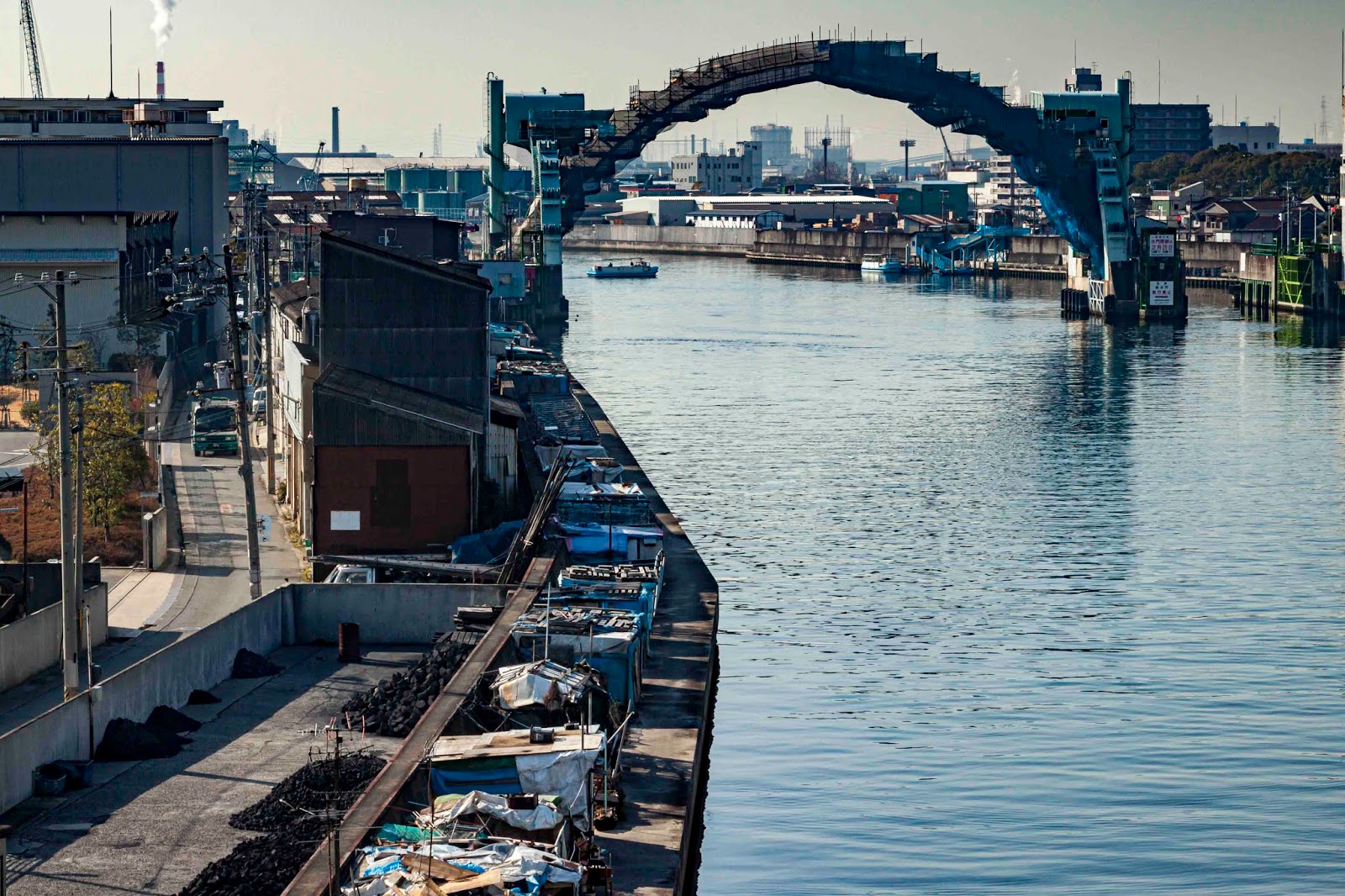
OSAKA 「REMNANTS
1926-1989 昭和残存」<昭和残存:Showa
Zanzon>
Photographer
: Tomatsu, Shiro
Design:Yabumoto,
kinumi Noda,
Hiromi
Printing
Director : Hirata、
Koji
(LIVE ART BOOKS)
Sales
and Advertising:TOMATO
FOTO HOUSES E-Mail:tomat8kv@gmail.com
Published
in April. 2019 by Siracusa Amano,
Kenichi E-Mail:siracusa@kenichiamano.com
Printed
by
Daishinsha
Printing
Co.,Ltd. in
Japan/LIVE
ART BOOKS
Collaboration
Matsuoka,
Kumiko
Tanimura
Hilgeman,
Hiromi
Paul
Hilgeman
Tokunaga.
Yoshie
Tokunaga
Institute of Photo & Art
Nankai
Electric Railway Co.,Ltd.
ISBN 978-4-9906907-4-8 定価/Price ¥3000+税(Tax)
本書はAmazon、楽天などのネット通販等で取り扱っていません
本書の問い合わせはtomat8kv@gmail.com (内藤/Naito)までお願いします。
*****************************************************************
Foreword
The
left bank district in the middle reaches of the Kizu river in Osaka
city was, until the end of the Meiji period, open farmland with a few
villages. Between Meiji 43-44, the city undertook redevelopment1
of extensive farmland north of the then Kotsuma village (covering
Tamade, Senbon and Kishinosato) dividing it into a neat grid pattern,
with the intention of creating a residential area which would connect
to the developing Osaka city center.
From
the Taisho period into the Showa, a diverse range of factories such
as spinning, textile, shipbuilding, steel, iron and mechanical
instrument manufacturing, as well as chemical and power plants were
clustering around the mid to lower reaches of the Kizu. Rentable
homes for the factory workers were built largely on the redeveloped
farmland and conversion of agricultural land to residential land
continued to take place. Shops catering for the workers also opened
and thrived.
At
the time of the Pacific War, central Osaka and factories along the
banks of the Kizu were heavily bombed by the US Air Force and
suffered great damage. The residential areas, however, escaped the
air raids. Soon after the war, the damaged factories were rebuilt,
and as the economy started to grow so did factory output. The
necessity for more housing for additional workers resulted in the
so-called “bunka jutaku” (cultural housing) being built, which
were two-storied, tiled-roofed wooden housing complexes, filling
every available space in the residential district creating a dense,
urban landscape.
From
the Showa into the Heisei during the “real estate bubble”, this
residential district being away from the Osaka center escaped the
extremely aggressive city redevelopment, and as a result much of the
Taisho-Showa period wooden housing remained. After the “bubble”
burst, as the recession took hold and factories closed down one after
another, the working families with children who had once occupied the
housing moved out. Now, the area is home to old people and
pensioners, still strongly retaining the atmosphere of the bygone
Showa era.
With
the intention of promoting a better housing environment and fire
safety, the “Osaka City Project Supporting (Demolition and)
Rebuilding of Dilapidated Private Sector Housing” was set up in
April 2011 including the “Program for Promoting the Removal of
Dilapidated Residential Buildings Along Narrow Roads” 2
which was identified as a priority. The city has since been actively
encouraging the dismantling and clearing out of the decrepit wooden
housing. Much of the cleared land still lies empty, surrounded by
metal fences.
The
left bank district in the middle reaches of the Kizu, its changes
from the Taisho to the Showa and then into the Heisei, and the
remnants of the Showa era such as the dilapidated wooden housing
complexes bring back long forgotten, nostalgic emotional peaks and
troughs felt by the Showa dwellers in downtown Osaka. But once such
housing complexes are finally taken down, as time moves on, the
cherished memories must disappear too, fading into oblivion.
Tomatsu
Shiro
<Photographs
taken between January and December 2017>
Translator’s
notes
Direct
translation for “Nōchi
Kukaku Seiri Kōji” is “Agricultural Land Readjustment
Construction Work”.
The
project and program were called in Japanese: “Ōsaka-shi
Minkan Rōkyū
Jūtaku
Tatekae Shien Jigyō”
and “Kyōai
Dōro
Endō
Rōkyū
Jūtaku
Jokyaku
Sokushin Seido” respectively.
References
Kawabata,
Naomasa and Nishinari-ku Osaka city, ed., Nishinari-ku
Shi [A History of Nishinari-ku],
1968
Furuya,
Hideki, Sōseiki
no Tochi Kukaku Seiri Jigyō
ni Kansuru Ichi Kōsatsu:
Osaka・Imamiya
Kōchi
Seiri Jigyō
o Nentō
to
shite [Study on Land Readjustment Project in the Early Period: with
Arable Land Consolidation Project in Imamiya village (Osaka) in
mind], Kankōgaku
Kenkyū
Vol.12, 3/2013
Notes
on dates
Meiji
period : 1868 – 1912 /
Taisho
period : 1912 – 1926 /
Showa
period : 1926 – 1989
Heisei
period : 1989 - 2019
まえがき
大阪市の木津川中流左岸地域は明治末期まで田畑が広がる農村でした。明治43年から44年にかけ、大阪市は発展する市街中心部に繋がる住宅地への転用を目論んで、旧勝間村(玉出・千本・岸里)北部の広域な田畑を碁盤の目のように農地区画整理工事を行っています。
大正から昭和になると、木津川中下流域は紡績、織物、造船、製鉄、鉄工、化学そして機械器具など多種多様な工場が集積し、ここで働く勤労者の賃貸住宅などが区画整理地に多く建てられ、農地が宅地になって行きました。併せて勤労者世帯相手の商店も出店し大いに賑わいました。
太平洋戦争時、大阪市中心部や木津川沿岸の工場はアメリカ軍による大空襲を受け大きな被害がありましたが、この住宅地域は空襲に遭わずに済みました。戦後直ぐ、木津川沿いの工場が復興され、更に経済の発展で工場が活況となり、増大する勤労者向け住宅の需要を補うべく通称「文化住宅」という木造二階建瓦屋根の集合住宅が僅かな隙間を埋めるがごとく建てられて行きました。そして木造住宅密集地となって行きました。
昭和から平成にかけての不動産バブル期、大阪市中心部から離れたこの住宅地は、猖獗さを極めた都市再開発にさほど縁が無く、大正から昭和に建てられた多くの木造住宅が残されました。バブル後、長引く国内経済停滞による相次ぐ工場の撤退に合わせ、勤労世帯である子育て世代も転出し、今では昭和の面影を色濃く残した高齢者の街となっています。
大阪市は密集木造住宅市街地を、居住環境の改善及び防災性の向上を図ることを目的に「大阪市民間老朽住宅建替支援事業 狭あい道路沿道老朽住宅除却促進制度」(平成23年4月1日施行)を設け、積極的にこの地区の老朽木造住宅の解体撤去を支援しています。除却された跡地の多くは金網フェンスに囲まれ更地となりました。
木津川中流左岸地域の大正から昭和そして平成と、時代を経た老朽木造集合住宅などの「昭和の残渣」は、昭和を大阪の下町で生活した人達の忘れていた、そして戻ることが出来ないあの時代の喜怒哀楽の思いを呼び戻してくれます。しかし、この老朽木造集合住宅などが取り壊された後は、何時しか過ぎ去る時の流れと伴に、切ない記憶は忘却の彼方へ溶暗して行くのでしょう。
東松至朗
*西暦と元号 明治:1868年~1912年/大正:1912年~1926年/昭和:1926年~1989年/平成:1989年~2019年
参 照 1.西成区史
川端 直正 (著) 大阪市西成区 (編集) 1968年
2.創生期の土地区画整理事業に関する一考察:
大阪・今宮耕地整理事業を念頭として 古屋秀樹(著)
観光学研究 Vol.12,
2013年3月
**********************************************************
©Tomatsu Shiro
A letter from a close friend
Tomatsu
san,
Thank
you very much for sending me a copy of your photographic book,
“Houses”. Sincere apologies for not sending you an email to thank
you even though I received it at the beginning of July.
I
had a lot to think about this book. The reason I couldn’t put pen
to paper for a while was because I was allowing my thoughts to
ferment in my head.
I seem to remember
writing about this before, but I was born in Shinkai Street in
Nishinari District in the living quarters of my grandfather’s
naphthalene and dye making factory. Soon after, we moved downtown to
an area called Hayashi-ji Shinka Town in Ikuno District and lived
there until I was eight years old and in my 2nd year of
primary school. We then moved again to the Nishi Tenkajaya shopping
district in Shioji Street in Nishinari District where my mother ran a
pharmacy. I was there, as the first born son, until I was 19.
Your
first book, “The Dome”, and the second, “Rivers”, both
brought back the landscape of my childhood in Osaka, as well as a
feeling of nostalgia and a sense of something irrevocably lost.
Your
third book, “Houses”, on the other hand, had a more profound
impact on me. No one living in Osaka was included in the photographs,
but only the traces of their presence; that provided a quiet impetus
giving me a feeling of déjà vu,
and I was back there, in that familiar atmosphere.
Those
houses that were built squashed together with no space in between -
people who were frugal and hard up lived there, like most of my
friends. In a long, terraced row of workmen’s houses where all the
internal layouts were exactly the same, each family lived in a tight
squeeze.
Roads
were narrow and often unpaved, with equally long and narrow shopping
streets; you could sense a brimming over of raw emotions as a result
of the stifling cheek by jowl existence. It was chaos, of a very
Asian kind.
In
essence, I don’t think there was enough space for living, for
studying or for playing.
From
time to time, I had to run away from home. To places that were
relatively rural like Sumiyoshi-shrine and Yamato river, to Sugimoto
Town where Osaka City University was, escaping, on foot.
Your
pictures, Tomatsu san, made me wonder deeply about what I wanted to
escape from. None of my friends live in those houses anymore either.
I
now work in the pharmacy department of an emergency hospital in
Hakata*
with around 250 beds.
There are seven
pharmacists with one administrator in a room of about 50m2.
A very small space indeed.
However,
when it comes to social interaction, there’s hardly any . They keep
their distance from one another as they work. After I started working
there I realised that in small to medium sized hospitals such as this
one, people come and go all the time and doctors, nurses, technicians
and administrators also change over so frequently that you never
quite feel settled.
Also,
the hospital space is the smallest size possible and there doesn’t
seem to be much money available. Hakata is, if anything, known for
its warm hearted people and I think that’s true, but in a
particular set up such as a hospital, to be too familiar may be
frowned upon. That’s human wisdom for you. You live and learn.
However, I am an oddity here, being an Osakan. I feel something is
missing, and then the “Osaka-ness” from the Showa era that in
many circumstances I was running away from pops up unexpectedly. As
Boy so the Man. It’s in my bones. I ran away yet sometimes I long
for it. Strange, isn’t it.
Tomatsu-san,
thank you for producing the “View Osaka” trilogy. When we’re
stirred by something, it makes us think. It was a good stimulus. What
are your themes going to be in the future, I wonder? I am looking
forward to finding out.
We
are both senior citizens now . Do look after yourself.
Yours,
Yoshioka
Takashi
July
29, 2015
*Hakata
is in Fukuoka prefecture in the northern part of Kyushu.
©Tomatsu Shiro
**********************************************************
写真集:「VIEW
OSAKA REMNANTS1928-1989 昭和残存」 解題
今までのVIEW
OSAKAシリーズは、書名を「THE DOME」、「RIVERS」、「HOUSES」、「Osaka1-chome 1-banchi/大阪一丁目1番地」でした。今回も簡単な英語かローマ字書名を考えていました。
本書は「友人からの手紙」が切っ掛けででした。2017年の一年間、大阪市西成区内の国道26号線と木津川に囲まれた範囲にある昭和の名残を主体に写真撮影しています。そして、書名は「SHOWA」を考えました。
ほぼ写真集原稿が出来た頃、来日していた欧州の知人に、「このような写真集を計画している。多くの欧米の人にも視てもらいたいと思ってる」と話し、原稿案を差し出すと、いきなり内容も視ずに書名の「SHOWA」を指さし、語気強く「NO! NO!!
・・・・!」と口にしました。つたない英語力の私は、恐らく「欧米の人にも見てほしいなら、このタイトルは止めろ」ということだなと何となく理解したつもりでした。
後日、大学を昭和40年代に卒業しすぐに渡欧され、現在も欧州で仕事をされている日本人女性に下記のようなメールを送り尋ねました。
写真集の書名で「SHOWA」を使わないほうが良いと助言頂きました。今一度私の理解が良く出来ていません。ヨーロッパでは「SHOWA」の綴りが不適切な理由を教えていただきたのですが、差し支えない範囲でお教えください。
そして、届いた回答は・・・
東松さま、SHOWA(しょーわ)ですが、第2次世界大戦時にドイツのナチによって行われた大量虐殺は、ホロコーストあるいは ショーア(Shoah,
Shoa、Sjoa)とも呼ばれているそうです。
日本ではショーアの方は知られていませんが多分ヘブライ語ではないかと思います。ヘブライ語はユダヤ人以外には遣われない言葉です。
ショーア
はユダヤ系の人、ドイツ人にとっては、聴き捨てならない言葉ですし、他のヨーロッパ人にとっても嫌な記憶につながります。Wが入っていて違うと言われるかもしれませんが、日本語での「ワ」と「ア」の歴然とした違いとちがい、向こうの発音では、owa は oah,
oa, にもっと近いです。
特に速く言うと。 また、ヘブライ語を知らない人たちにとってshowa という綴りもあるのかなと思われる可能性も十分あります。まぎらわしいです。書名だけ見たら、ホロコーストの本だと間違われたり、内容を見ても、何故これがホロコーストなんだろうと思われたりする可能性があるわけです。
分かっていただけますか。
この助言により書名には「SHOWA」を使わないことにしました。
本書は平成29年(2017年)に、大阪市西成区内の国道26号線と木津川に囲まれた範囲で見ることができる昭和の「面影、遺構、残存物等」が対象です。そこで、「SHOWA」の代わりに昭和の年代を意味する西暦1928年~1989年と、「面影、遺構、残存」を意味する英語の複数形REMNANTSを選び、「REMNANTS 1928-1989」とすることにしました。
ただ、英文書名「REMNANTS 1928-1989」だけでは日本で充分理解してもらえないと思い、和文書名「昭和残存」を付記する形にしました。
本書は、平成最後の「昭和の日」(2019年4月29日)に出版しています。
****************************************************************